
How Monrovia Residents Are Found
Different clues lead to different keepers. An assessor search begins with a Monrovia situs address or an AIN, a ten-digit parcel identifier. The number ties a map to a tax record. A deed proves title more strongly than an assessment screen ever can. Court indexes name parties, not whole households. A directory or newspaper may place an occupant at a moment in time. A silent year proves nothing about who lived there.
A good residents directory search starts with the cheapest clue. It climbs toward the record that verifies it. Spell the name exactly as printed first. Then try initials, married names, compound surnames, and a middle name. The sequence here makes a practical first pass for Monrovia research.
- Write down the known name, date range, street form, city, and reason for the search.
- Use the Los Angeles County Assessor Portal by address or AIN, saving the situs, legal-description shorthand, and parcel facts.
- Use a lawful, identity-gated voter status check only when the last name, birthdate, house number, and ZIP are already known.
- Take a likely owner and approximate year to the Los Angeles County Registrar-Recorder/County Clerk name-and-year index in Norwalk.
- For an older household, pair the Heritage Room, Legacy, newspaper, census, probate, and vital-record clues before drawing a conclusion.
The Offices Behind Monrovia Records
Monrovia is an incorporated San Gabriel Valley city. But no single office holds its resident trail. The record trail splits among City Hall, Los Angeles County, and California agencies. City Clerk staff route OnBase documents and California Public Records Act requests. The county keeps the assessment roll, deed records, court files, vital copies, and election registration. State systems add business entities, professional licenses, custody records, and confidentiality services.
Each office answers a narrower question than any master resident list would. The Recorder shows recorded parties and legal interests. The Assessor links a parcel to its assessment facts. The elections office verifies one known registration. The library and museum preserve the historical record that modern portals never replace.
Los Angeles County RR/CC
Real Estate Records, Norwalk headquarters
12400 Imperial Highway, Norwalk, CA 90650
(800) 201-8999
Los Angeles County Assessor
Address and AIN property search
Los Angeles County, California
Owner-name Internet search unavailable
LA County Elections
Voter Registration Status
12400 Imperial Highway, Norwalk, CA 90650
(800) 815-2666
Monrovia's AIN Property Search
Address-led residents directory searches start best at the Assessor Portal. Its main control reads "Search by AIN or Address," with Basic Search, Legal Search, and Map Search modes. A failed address can signal a corner lot, a multiunit or commercial situs, vacant land, or a newly configured parcel. "VAC/VIC" marks a vacant parcel near a displayed feature. It is not a precise deliverable address.
Save the AIN before moving on. Parcel details may show situs address, legal-description or subdivision shorthand, tax-rate area, land and improvement values, building year, square footage, units, lot size, and map links. One limit stands out. The public portal offers no general owner-name Internet search. Assessed ownership and mailing information serve as parcel evidence, never as a list of people inside the home.
| Field | Type | Required | What to record |
|---|---|---|---|
| AIN | Text | Alternative | Ten-digit parcel identifier; preserve leading zeros and punctuation |
| Street Address | Text group | Alternative | House number, direction, street name, and suffix |
| City | Field or list | Usually with address | Try Monrovia and postal-name variants when a match fails |
| ZIP Code | Text | Optional by portal version | Narrows the address; it is not a city-limit test |
| Parcel detail | Result view | After search | AIN, situs, legal description, values, year built, and map |
For a map check, open the Los Angeles County Parcel Viewer and click the target polygon and its neighbors one at a time. A parcel outline helps organize the search. It is not a surveyed boundary or proof of who occupies a building.
Note: A matching owner mailing address can support a lead, but it still does not establish every resident at the situs.
The Assessor's parcel result is a roll, an assessment record organized around property rather than a household. The AIN joins that roll to a parcel map. A legal description then identifies the lot or subdivision in terms that survive a street-label change.
- Roll
- An assessment record for a parcel, with values and property characteristics.
- AIN
- The Assessor Identification Number used to retrieve a specific parcel.
- Situs address
- The physical location assessed, distinct from the owner’s tax-mailing address.
- Index
- A finding aid that points to a fuller record, such as a deed or case file.
Monrovia Deeds at Norwalk
Los Angeles County publishes no public Internet deed index. The Recorder keeps alphabetical grantor and grantee indexes at its Norwalk headquarters, filed by name and recording year. The design is deliberate. The county cites address-protection concerns under Government Code §7928.205, formerly §6254.21, so a remote address search is not a missing button.
Bring the current owner name, likely prior names, an AIN or legal description, and an approximate year. Records from 1851 through 1957 are reviewed on the lower level. Material from 1958 to the present sits on the second floor. Appointments support viewing and known-document copy requests. Once a document is identified, a mail request can cite the indexed party, recording year, and instrument information. A targeted name-and-year request differs sharply from asking staff to search a street.
The index can return grantor, grantee, document type, recording date, instrument number, book and page for older records, and a legal-description or map reference. The recorded image may add vesting language, return address, signatures, and a notary block. A deed's party list is a title clue. It is not an occupancy list.
Norwalk fallback. When an online address search ends at the Assessor, carry the AIN and the likely name to the RR/CC index. The office records reach 1850/1851 to the present, even though the index is not online.
Monrovia Voter Status Checks
LA County's Voter Registration Status form answers a narrow question. It checks one registration at a time. Think of it as a yes-or-no tool, not a browsing tool. It is not a Monrovia street directory. It cannot list the people at an address. You must supply a last name, birthdate, house number, and ZIP code. With all four keys in hand, the result can support an identity match. Without them, the form returns nothing useful for building a block list.
Access to the voter file is limited by law. California Elections Code §§2180-2194 permits electoral, governmental, scholarly, journalistic, political, and similar uses. Social Security numbers stay confidential, as do driver's-license, state-ID, and signature data. Dated Reports of Registration offer aggregate Monrovia counts rather than named lists. Safe at Home protections may leave an address absent or substituted. That is a feature of the system, not a gap.
Used lawfully, the official voter status page tells you whether one known registration matches. That is its whole job.
These fields appear in the form:
- Last Name: alphabetic text
- Birthdate: date in month/day/year format
- House Number: numbers only for the residence
- ZIP Code: numbers only
LA County Voter Registration Status therefore works as a verification tool. Its four-key design, shown on the county lookup page, keeps it from serving as an open-ended residents directory.
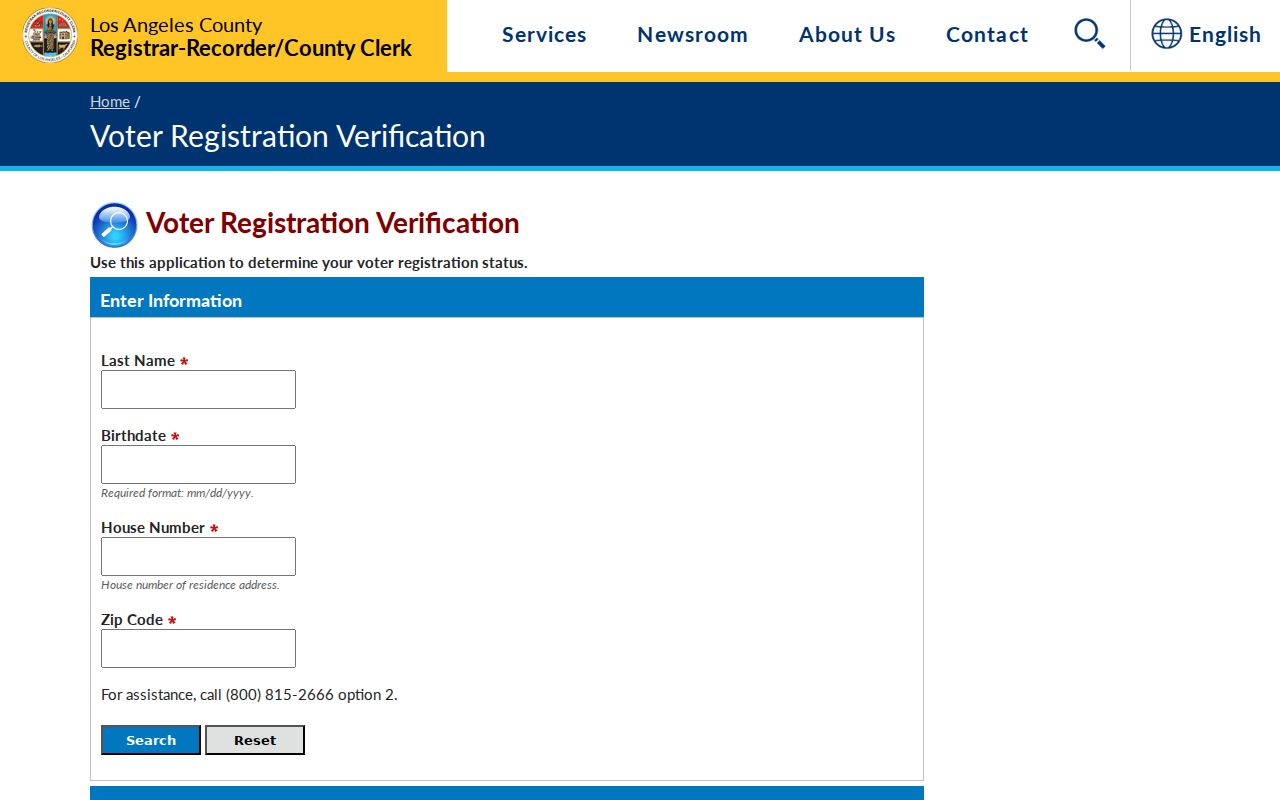
The form confirms a known match. It cannot enumerate who lives at a Monrovia address.
Current Monrovia Resident Sources
Current records each give a partial view. The assessment roll names an assessed owner and a parcel. The voter form verifies one registration. The Monrovia staff directory lists public employees and official contacts. Business and license records tie a person to an entity or credential. No single source establishes a full household.
| Source | What it can show | Keeper | Access |
|---|---|---|---|
| Assessor parcel roll | Situs, AIN, assessed owner and property facts | LA County Assessor | Free address/AIN portal |
| Voter status form | One known registration match | LA County Elections | Four required identifiers |
| Recorder index | Recorded parties, liens, easements and transfers | LA County RR/CC | Norwalk appointment |
| City staff directory | Staff name, title, department, phone and email | City of Monrovia | Free online browse |
| Business and license files | Entity, agent, license status and affiliation | California and city offices | Free portals; rules vary |
Here a "directory" means a searchable set of entries, not proof the entries describe the same kind of person. The city staff list is not a household roll. A business address is affiliation evidence at best. To verify one person, compare at least two independent links and keep the source dates close at hand, since a property roll centers on land rather than who sleeps there.
Monrovia Business and License Clues
Many resident questions are really affiliation questions. California's Secretary of State bizfile shows an entity's legal name, number, type, status, and formation jurisdiction. It also lists the agent, filings, and principal or mailing addresses. The Department of Consumer Affairs search narrows a professional by board. It covers license type, name, number, city, or county too. Los Angeles County fictitious-business-name records and Monrovia's monthly active-business list add local grounding.
Treat Monrovia's monthly active-business list as a public lead. It is not a certification of accuracy, standing, or compliance. Home occupations are omitted for confidentiality. Never rewrite an agent or business address as a residence. Cross-check the entity number or license number first. Then compare the date and city against the person record being studied.
For licenses, the California Department of Consumer Affairs search is the clearest starting point. The official lookup page displays a state-level professional search. It can separate two people sharing a name.
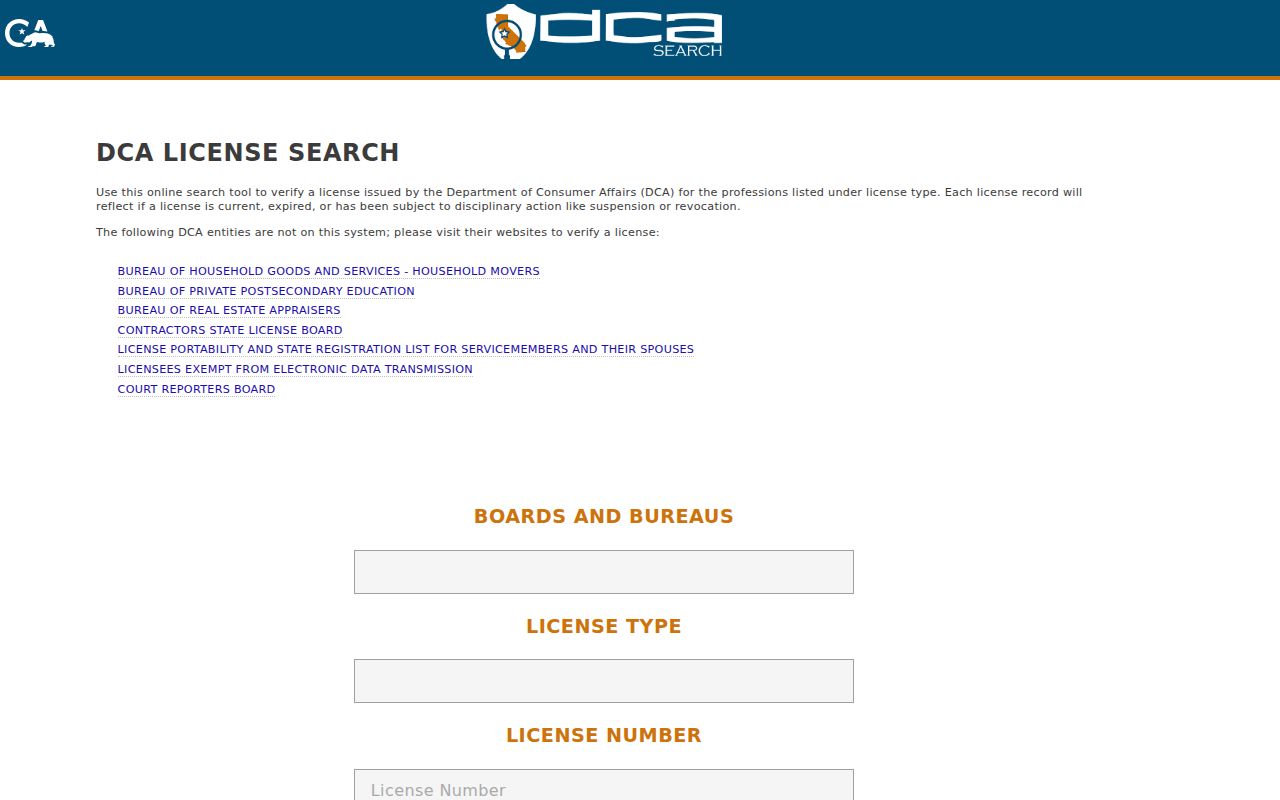
A license result can add a status or discipline clue. It cannot prove a licensee lives in Monrovia. That proof must come from elsewhere.
For an entity name or number, the California Secretary of State bizfile search is the better route. Its basic result and filing history connect a person to a business without turning an affiliation record into a residential claim.
That line keeps a Monrovia residents directory accurate. Business records identify the right person, while parcel and deed sources answer the property questions.
Monrovia Court Name Searches
Los Angeles Superior Court serves as the local trial-court system for Monrovia. Its civil, family, probate, and small-claims party index is not a free general resident roll. Coverage starts in 1983 for unlimited civil, probate, and family cases. Limited civil begins in 1991, and small claims in 1992. A paid name search still helps with a same-name problem or an estate trail.
Case Access is free once you know the case number. A result can display the case number, type, filing date and location, and caption. Party roles, status, hearings, docket events, and document links also appear. Web results are not the official record. Courthouse public terminals show electronic material without the per-search web charge. Certified copies come from the clerk.
The Los Angeles Superior Court case access page is where you choose the right route. A party-name result can point to a filing location and document count. Federal matters sit outside this system. They belong in PACER for the Central District of California.

Use a court entry to verify a party and a date. Then seek the clerk-held record when the detail matters. A case listing never shows every person at a Monrovia address.
California Custody Records
Custody systems answer custody questions. They are not a residents directory. The Monrovia Police Records Bureau handles eligible local reports and letters. State custody falls to the California Department of Corrections and Rehabilitation CIRIS search. The Los Angeles County Sheriff's Inmate Information Center shows booking and custody fields. Those fields shift quickly. A booking entry never proves where a person lives now. The California Megan's Law site carries a statutory public-safety purpose and its own use warning. Nor does custody equal conviction.
Turn to the Los Angeles County inmate information search only when county custody is the real question. Returned fields may include facility, status, bail, or court clues, within the system's limits.
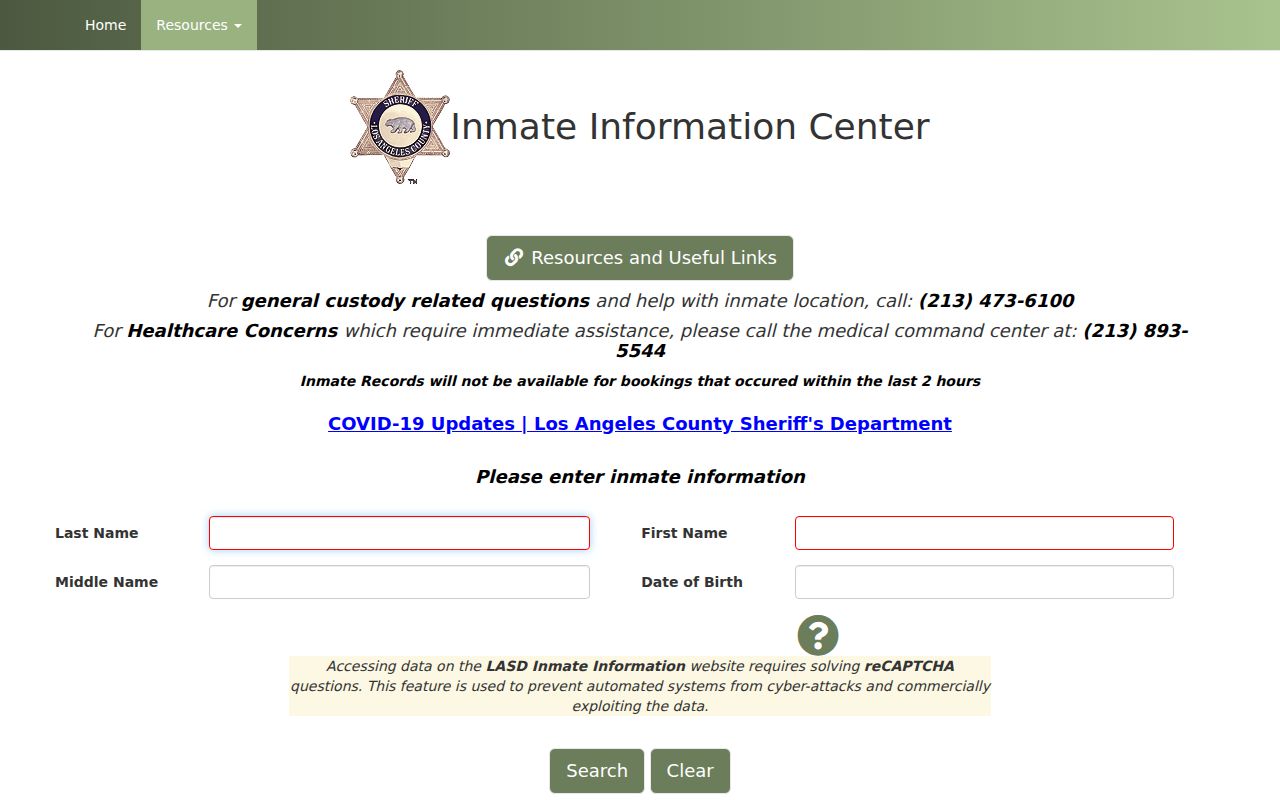
Custody changes fast. For an outcome, a case number or court result is the stronger follow-up. A registry cannot tell you who belongs in a neighborhood. Treating it that way misuses the record.
The California Megan's Law registry shows only the fields the public system permits. Its purpose and exclusions matter. Its results should never be republished as a block list.
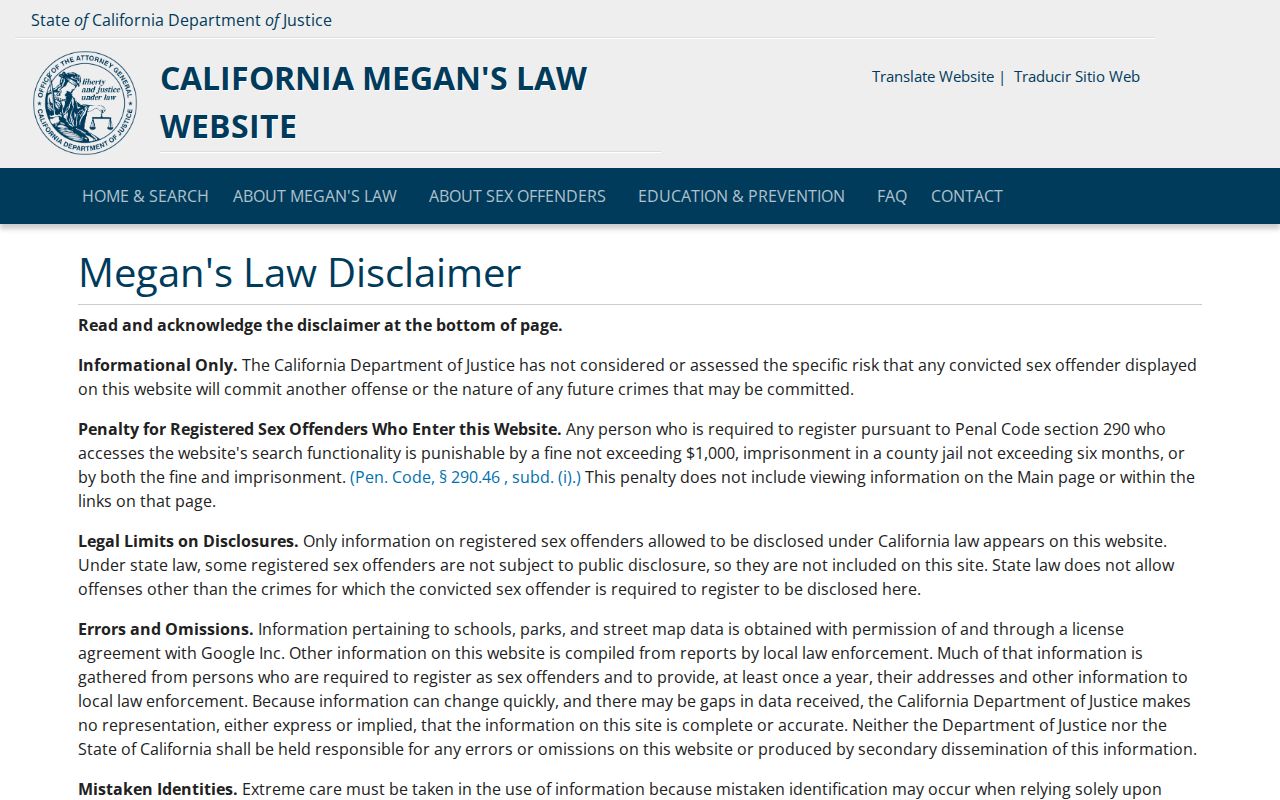
Public availability is not a green light. The registry image is a reminder that lawful-use limits stand, and every record should be verified with its custodian before it is trusted.
Monrovia's Historical Directories
The historical residents directory for Monrovia starts on a shelf. Monrovia Public Library's Heritage Room holds city directories with gaps from 1908 through 1971. It also keeps a Street Address Index, house-history clippings, local histories, newspapers, and architectural books. Visits run by appointment only. Much of the material stays in the building with staff retrieval and identification.
PastPerfect adds selected directories, telephone books, house histories, biographies, yearbooks, and digitized photographs. At the Historical Museum's Trentalange Research Center, more than 9,000 searchable directory records cover 1888 through 1917, with selected streets in other years. The Monrovia city directories collection page walks through the full collections and how to read an entry. For a quick home search, the handoff is simple. Start from an address index or reverse directory. Record the occupant exactly as printed, and test the years on either side.
Monrovia's newspaper chain runs from the *Planet* in 1886 to the *News Post* in 1992, with several title changes between. That chain matters. One title search can miss a move, obituary, business notice, or social item printed under a later masthead. So past residents of Monrovia often surface only when the paper trail follows every name.
Legacy's Monrovia Records
The Monrovia Legacy Project gives the historical residents directory a searchable digital layer. A March 2025 city update put nearly 10,000 photographs and documents online. Another 2,500 were planned for that summer. An August update added family collections, historic telephone directories, and high-school yearbooks. Catalog coverage keeps growing, though some items carry only a description and no downloadable image.
Search terms can be joined with AND. OCR or spelling variation can defeat free text. Controlled vocabularies such as People, Search Terms, and Subjects help then. Exact street terms, named houses, and places can open a path. Encinitas, Mills View, and Sawpit Canyon can do what a surname alone misses. Copy each result's title, description, record type, creator, and image availability into your notes.
A record can carry a story about the land itself. Monrovia documents an 1887 house moved from Wild Rose and Jasmine to 323 Heliotrope. Keep the old address and the present parcel as separate clues. Join them later with permits, the legal description, and the directory sequence for that street.
Monrovia Unclaimed Property Clues
The State Controller's unclaimed-property search can surface an older name, reported city, address, and holder. It also lists a property ID. Treat it as a lead. It is not proof of current residence. Reported addresses can be stale. A claim demands separate proof. Search spelling variants, and retain the date of the result.
Go straight to the California unclaimed-property search rather than paying an unsolicited finder. The official result earns its value when its name, city, and historical address line up. Confirm it against a directory, obituary, deed, or probate record.
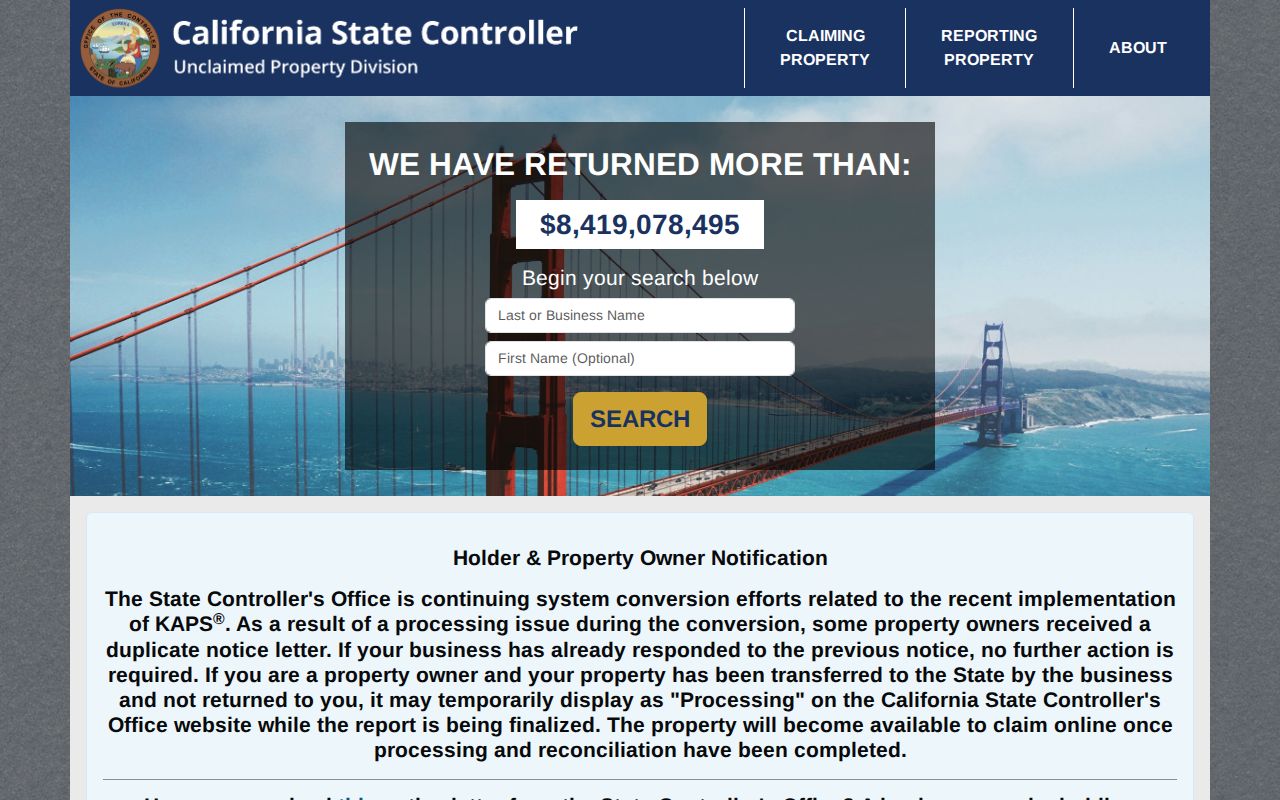
The result can narrow a family-history search, but it cannot turn a stale address into a current household claim in the Monrovia residents directory.
Monrovia CPRA Request Route
When a city record is not in OnBase, a California Public Records Act request reaches an identifiable existing record. Name the office, the record series, the date range, an address, an incident number, or other facts that let staff find it. Do not ask the city to build a new answer from scattered files.
Monrovia directs requesters to the City Clerk at City Hall, and the normal determination period is ten days under Government Code §7922.535, with a written extension of up to fourteen days for unusual circumstances. Inspection is ordinarily free. Copy charges stay limited to direct duplication costs unless another law controls. City Hall sits at 415 S. Ivy Avenue. The published public-record contact is (626) 932-5550 and cityclerk@monroviaca.gov, and the Monrovia public-record request page is the current starting point.
OnBase may hold building-permit history and planning approvals. The Permit Book covers 1911 through 1947, while newer permit material runs 1948 to the present per the 2026 library guide. Those files can add applicant, contractor, scope, issue date, valuation, inspection, and final-status clues to an address trail. They still cannot prove continuous occupancy by past residents.
Monrovia Name-Matching Traps
Monrovia sits on just 13.6 square miles with a 2025 population estimate of 38,264. Small size does not shrink same-name risk. Old Town commercial ledgers and early residential tracts each left different record trails. So did Craftsman blocks, postwar housing, and later industrial zones. A name alone proves nothing. Pair it with a date, middle initial, spouse, parcel number, occupation, or affiliation. Only then treat it as one person.
Always tie results together with two independent links. A middle initial plus a legal description beats a bare name in the residents directory. A spouse matched to the same street directory address can anchor a historical record. An entity number with a filing address separates business namesakes in the city directory. Check that dates make sense. A tax owner, deed party, court party, licensee, and directory occupant are different roles. A resident lookup should never merge them in silence.
Monrovia's naming history adds traps of its own. Compound surnames, married-name changes, initials, and multilingual spellings all complicate a street directory search. So do shifting newspaper titles. Record the spelling exactly as the source printed it. Keep the normalized form separate. A missing hit in a ZIP code directory or property rolls may point to a gap, a variant, or a protected record. It is not a true absence.
| Search path | Best use | Limit |
|---|---|---|
| Assessor and Recorder | Parcel identity, assessed ownership, title parties, legal description | Not a complete occupant or household list |
| Library, Legacy, and newspapers | Dated occupants, spouses, occupations, moves, and family clues | Gaps, old labels, and catalog or image limits |
| Commercial compilation tools | Possible lead for a spelling or address variant | Mixed sources, lag, merged names, and unclear provenance |
Lawful personal use. Monrovia records are useful for family history, civic research, reconnecting, property curiosity, and safety awareness. Do not use a lookup to stalk, harass, threaten, or intimidate a person, and verify important facts with the custodian office.
For a known address, the Los Angeles County Assessor Portal is the cleanest first stop. The parcel key it returns is worth saving. That number carries the search forward into deeds, permits, and the historical volumes of the Monrovia residents directory.
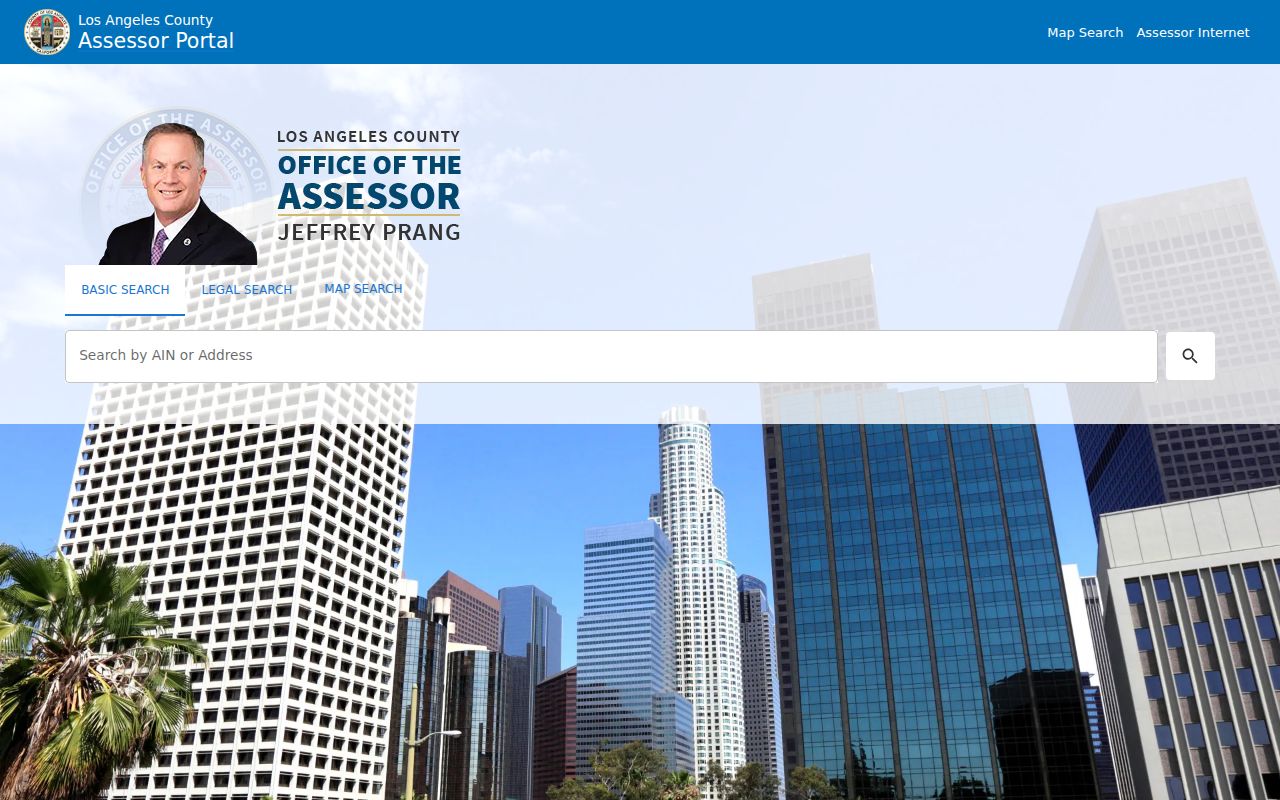
A parcel key gives the work a spine. What it cannot do is convert one deed into a census of everyone living at a Monrovia address. The residents directory earns trust when each result states what it proves, which custodian holds the record, and what stays unknown.